
Thank you for Subscribing to Semiconductor Review Weekly Brief
× 
Semi Conductor Review Weekly Brief
Be first to read the latest tech news, Industry Leader's Insights, and CIO interviews of medium and large enterprises exclusively from Semi Conductor Review
has been recognized by Semiconductor Review Magazine as the exclusive recipient of “Top AC-DC Transformer Manufacturer in APAC 2026,” based on our proprietary methodology, reflecting its position in the industry, and is also named among “,” reflecting its broader leadership. This profile has been developed by the Semiconductor Review research and editorial team based on insights from an interview with PhD (B.A.) Hiromune ISHII, President and Representative Director.



Sanshin Electric
Thermal, Noise and Size
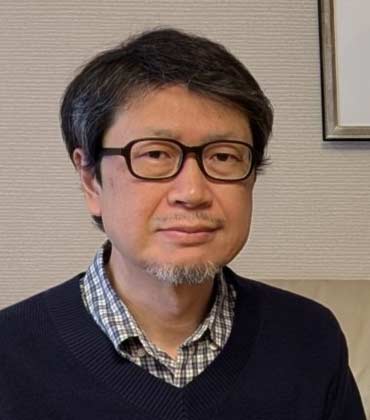 PhD (B.A.) Hiromune ISHII, President and Representative Director
AC-DC transformers are no exception. The essential task is to solve these three challenges within a series of technical trade-offs while continuing to create value for the customer.
Improving one area can easily affect another. For example, reducing size may increase thermal concentration, while changes in winding or magnetic structure can influence noise and electrical performance. Thermal management, noise reduction and miniaturization therefore cannot be considered independently. The real engineering challenge is to find the optimal balance among them.
There are two principal approaches to addressing these issues.
The first is analog design expertise, or what is often described in Japanese manufacturing as an “integral” or “suriawase” approach. An AC-DC transformer is not an isolated component. Its performance depends on its relationship with the surrounding power circuit, components, operating conditions, enclosure, thermal environment and load characteristics.
As a result, transformer development requires careful optimization of the core, winding structure, bobbin, leakage inductance, insulation and other parameters in relation to the entire system. This type of engineering relies not only on numerical design methods but also on accumulated experience and practical know-how.
Our group has developed such analog design capabilities over many years and applies this accumulated expertise to customer-specific requirements.
The second approach is differentiation through component materials and structural technologies.
There are natural limits to how far conventional materials and structures can be optimized through design adjustment alone. Introducing differentiated components or structural technologies can help ease the traditional trade-offs among thermal performance, noise and size.
For noise-related challenges, our group has developed and patented a proprietary spherical core technology. For thermal challenges, we have developed and patented our Cool Bobbin technology.
The spherical core approach is designed to address noise through magnetic structure, while the Cool Bobbin approach improves thermal performance through an optimized bobbin structure.
In other words, our approach combines two capabilities: accumulated analog integral design expertise and proprietary differentiated structural technologies. Together, these capabilities allow us to address customer challenges involving thermal management, noise and miniaturization.
These challenges are becoming even more important as the environment surrounding power electronics continues to change.
The rapid expansion of AI-related technologies is driving significant growth in electricity demand. At the same time, electronic products are expected to become smaller, more efficient, more powerful and more reliable.
As a result, electronic components, including AC-DC transformers, are required to operate under increasingly demanding design conditions. Engineers must manage greater thermal loads, stricter noise requirements and continued pressure for miniaturization, often at the same time.
Under such conditions, simply supplying a transformer as a component is no longer enough.
What customers increasingly need is a partner that can understand the entire power system, identify the underlying engineering challenges and work collaboratively to determine the optimal transformer solution. Where conventional design approaches reach their limits, differentiated materials, structures and components can provide new possibilities.
Our group intends to continue creating customer value by combining our accumulated analog design expertise with our proprietary technologies, including the spherical core and Cool Bobbin.
Even as design conditions become more demanding, we will continue to address the timeless challenges of thermal management, noise and size, and work closely with customers to develop practical and differentiated solutions.
This content is copyright protected
However, if you would like to share the information in this article, you may use the link below: